
There’s a specific kind of heartbreak unique to desert homeowners. You spend real money on a beautiful outdoor set, and by the end of one summer the colors have washed out, the plastic has gone brittle, and the cushions feel like they came out of an oven.
That’s what the Las Vegas sun does to furniture that wasn’t built for it. The same UV that fades a dashboard does the same thing to a patio set, only faster, because there’s no windshield in the way.
Which makes buying outdoor furniture here less about style and more about survival. The pieces that last are the ones chosen with the valley’s heat treated as the main design constraint, not an afterthought.
The heat benchmark that reset expectations
To get what furniture is up against out here, look at where the ceiling sits. The summer of 2024 set the all-time mark, a peak local coverage noted when the city hit 120 degrees on July 7 during its hottest season on record.
Even the milder year that followed still ranked among the hottest on record, with dozens of triple-digit days stacked across the summer. This isn’t a place that occasionally gets hot. It’s a place that stays reliably, punishingly hot for months.
Surface temperatures on furniture in direct sun run far above the air temperature. A dark metal armrest can get genuinely painful to touch, and a cheap resin chair can soften and warp under steady exposure. A covered patio takes the edge off by blocking direct sun, but the ambient heat is still brutal, so furniture has to handle both the radiant load when the sun sneaks in at an angle and the plain baseline heat of a desert afternoon.
Materials that earn their place in the sun

The shortlist of materials that thrive here is shorter than most catalogs suggest. Powder-coated aluminum leads. It won’t rust, it stays cooler than untreated metal, and the finish is built to fight UV fade.
Color inside that material matters more than people expect. Lighter frames in sand, cream, or pale gray soak up less heat and stay more comfortable to touch. Dark frames can get uncomfortable even under a cover.
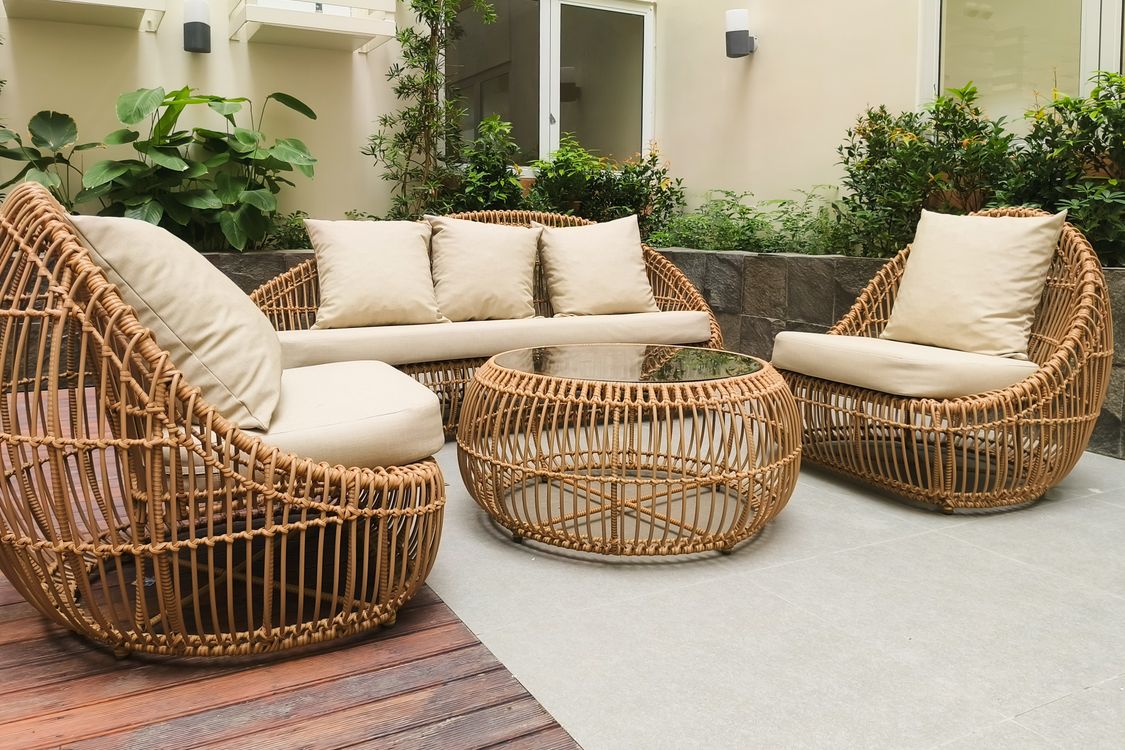
For seating, synthetic resin wicker beats the natural kind, which cracks in dry heat. Paired with UV-resistant performance fabric, it holds color and shape through seasons that would wreck lesser materials. Teak and other dense hardwoods have a spot for accent pieces, valued for weathering without failing, though they ask for more care. The through-line is simple: anything going outside here needs a real answer to how it handles UV and heat.
Letting the cover do part of the work
Furniture and shade are a system, not two separate purchases. The smart play uses the covered structure to protect the vulnerable pieces and saves the open areas for the most heat-tolerant ones.
Deep-seated lounge furniture and anything with real cushioning belongs in the shade, shielded from the worst of the fade and the heat. The cover dramatically stretches the life of exactly the pieces that cost the most to replace. Even under a solid roof, angled morning and evening sun finds its way in, so outdoor curtains, side screens, and thoughtful placement still earn their keep. The whole goal is to minimize the hours any given piece spends in direct exposure.
Cushion habits are the unglamorous part that separates furniture that lasts from furniture that doesn’t. Storing cushions out of the sun when you’re not using the space, instead of letting them bake, can double their usable life.
The covered patio is the foundation that makes all of it possible. It creates the protected envelope, sets the boundary of the usable space, and shelters the investment underneath. In a city that’s now touched 120 degrees, the lesson is blunt. Buy for the heat first and the look second, let the shade protect what you bought, and everything you own outside gets more time before it gives up.
